






High-Contrast LED COB Displays: The Real Reasons Behind Black-Screen Color Inconsistency — And How We Solve It

As premium displays become increasingly common in retail, command centers, and creative installations, the issue of high-contrast LED COB display black-screen color inconsistency has become a key topic among system integrators and end customers.
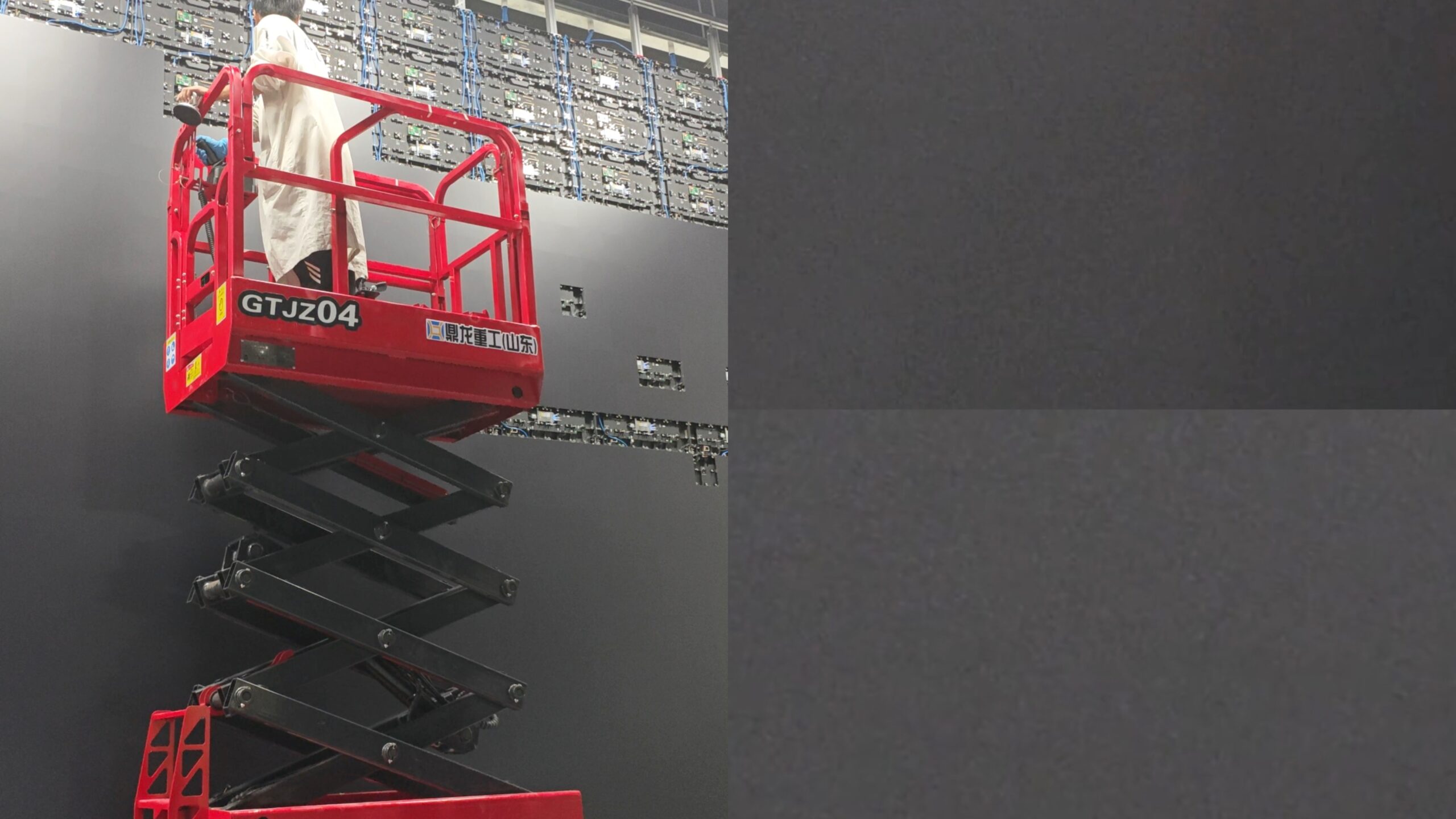
COB technology delivers exceptional contrast, durability, and visual clarity, but when the screen is completely black, some users observe darker and lighter zones.
This article explains why this happens, the material and optical science behind it, and how the engineering processes minimize the issue to ensure a more uniform COB product.
1. Packaging Materials Have Different Reflectance Levels (Core Reason)
This color inconsistency often originates from how COB is built.
The black appearance is formed by:
-
black epoxy underfill
-
black encapsulation resin
-
PCB black ink
-
micro-textured surface finish
These materials do not share the same reflectance, especially within the 450–550 nm visible-light spectrum.
Even when the screen is not emitting light, ambient light reflects differently across these materials, leading to visual differences such as:
-
deep black
-
grayish black
-
slightly brighter black
Black-screen mode is therefore the most sensitive state where inconsistencies become visible.
2. Incidence Angle Differences Under Real-World Lighting
The surface of a COB module mixes micro-matte absorption with soft diffuse reflection.
When external light hits the display:
-
Larger incident angle → stronger scattering → the area appears lighter
-
Smaller incident angle → stronger absorption → the area appears darker
This leads to visible high-contrast LED COB display black-screen color inconsistency especially in:
-
bright showrooms
-
retail spaces with spotlights
-
exhibition halls
-
environments with large windows
Module borders and seams are more sensitive due to how ambient light interacts with their geometry.
3. Batch-to-Batch Micro Differences in Resin, Ink, and Curing
Even when all materials meet specifications, they may still differ slightly in:
-
resin absorption rate
-
curing temperature & duration
-
PCB ink gloss
-
surface smoothness (matte vs micro-gloss)
-
dispensing thickness & micro-texture
Because COB presents a large, uninterrupted optical surface, small differences become magnified under certain lighting.
This is another contributor to high-contrast LED COB display black-screen color inconsistency, especially when mixing module batches.
4. Environmental Lighting — The Most Common Source of Misjudgment
In more than 90% of customer feedback cases, inconsistencies shown in photos actually result from:
-
camera angle
-
automatic phone exposure
-
overhead spotlights
-
reflections from flooring or furniture
-
uneven surrounding lighting
This explains why the same screen can look:
-
completely uniform from one angle
-
uneven from another
Environmental factors amplify the visibility of high-contrast LED COB display black-screen color inconsistency, even though the display itself is functioning normally.
⭐ The Solutions to Minimize Black-Screen Inconsistency
To ensure consistent visual performance, these kind of engineering and manufacturing optimization methods will be applied.
1. Strict Material Absorption-Rate Matching
We precisely measure and match:
-
epoxy
-
encapsulation resin
-
PCB black ink
-
micro-texture surfaces
using spectrophotometric reflectance testing to reduce variation.
2. Unified Curing and Surface-Texture Control
Careful control of curing temperature and duration ensures:
-
stable surface gloss
-
consistent matte characteristics
-
uniform resin hardening
This enhances black-screen uniformity.
3. Batch-Locking System for Project Consistency
All modules within the same project are produced using:
-
identical material batches
-
unified optical parameters
-
synchronized production schedules
This significantly reduces the chance of high-contrast LED COB display black-screen color inconsistency caused by batch differences.
4. Pre-Delivery Optical Matching Under Unified Lighting Conditions
Before calibration and shipment, we perform black-screen optical matching under standardized lighting conditions, including:
-
showroom-type lighting
-
retail lighting
-
angled side lighting
-
downlighting
In this controlled environment, we swap and re-match modules to enhance black-screen color uniformity for the entire display.
This ensures that when the display arrives, its black-screen appearance is already optimized.
🔍 Why This Matters for Your Project
A high-contrast LED COB display black-screen color inconsistency does not represent a functional defect—it is the natural result of material reflectance, lighting conditions, and optical physics.
What truly differentiates manufacturers is their ability to:
-
control material properties
-
match batches
-
manage optical consistency
-
apply pre-delivery uniformity processes
Through continuous engineering refinement, we ensure that your COB display achieves:
-
deeper perceived black
-
better uniformity
-
higher contrast
-
a superior premium look under real-world lighting
If your project demands the best possible COB performance, we are prepared to deliver displays with industry-leading consistency and reliability.
Click here if you have any questions!
Hello,
Would like to have an idea about the price for our shops FNL.
Thanks
please contact us for more information info@ocolour.com
A clear and informative article. The site is useful and well designed.